Real-Time Alerts Redefine Participation Rhythms in Online Table Games
Logan Lorenz · Jul 22, 2026
Real-Time Alerts Redefine Participation Rhythms in Online Table Games
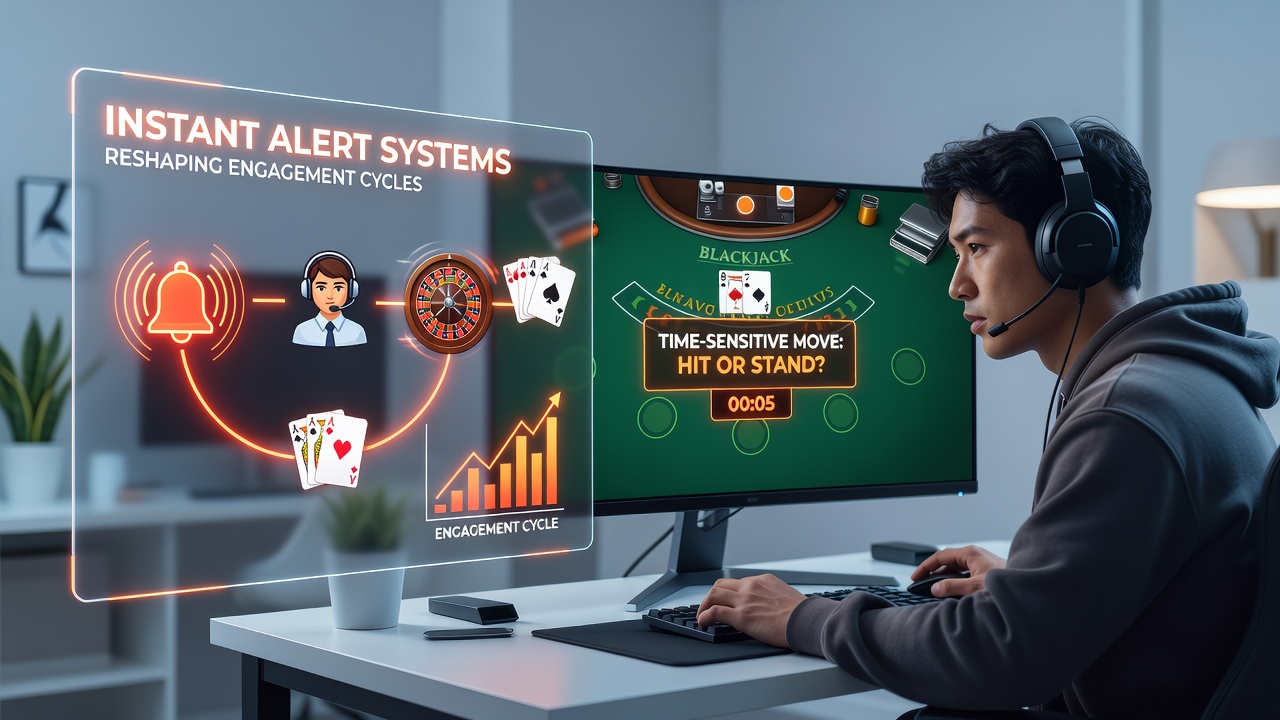
Instant alert systems deliver push notifications, SMS updates, and in-app messages that notify users about table availability, bonus triggers, and session milestones in real time. These tools connect directly to backend player data platforms, allowing operators to time communications based on individual activity logs rather than generic schedules. Data from platform analytics shows that users who receive targeted alerts log in at rates 35 percent higher than those without such prompts, according to aggregated metrics shared by multiple digital gaming providers.
Mechanics Behind Alert Delivery and User Response
Alert systems operate through integrated APIs that pull from live game servers and loyalty databases, triggering messages when specific conditions appear such as a seat opening at a preferred virtual table or a streak-based reward becoming active. Operators segment audiences by past session length and game preference, then route notifications through mobile operating systems or web push channels. Studies conducted by the American Gaming Association indicate that response windows average under four minutes for alerts sent during evening peak hours, whereas daytime messages generate slower engagement but longer overall session durations once users enter the platform.
Users often experience these prompts as extensions of the game environment itself, since the alerts frequently include direct links that bypass lobby navigation and load straight into active tables. This seamless transition reduces friction between notification and play, creating tighter loops where one session ends and the next begins with minimal delay. Research from university-led gambling behavior labs in Australia has tracked how repeated exposure to these prompts correlates with more consistent daily check-ins across a 90-day observation period.
Shifts in Engagement Cycle Patterns
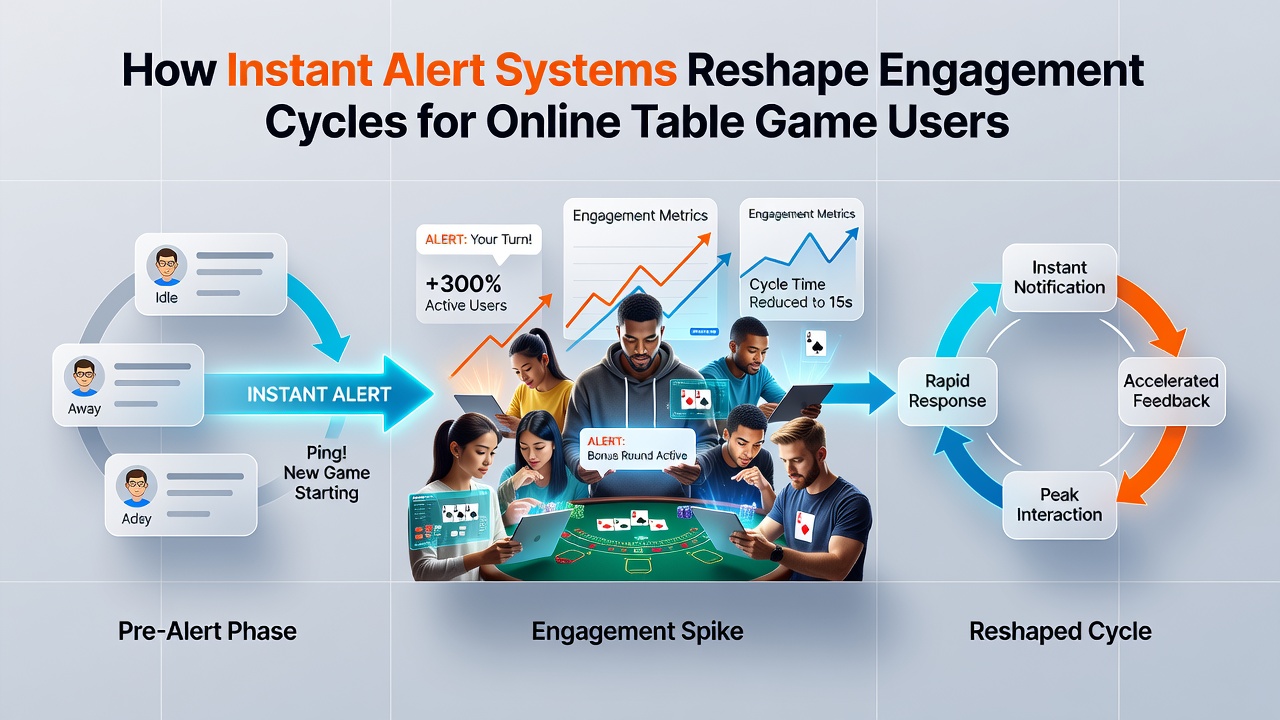
Traditional engagement cycles for online table game participants followed longer intervals between sessions, often spanning several days between logins. Instant alerts compress these intervals by surfacing opportunities at moments when user attention might otherwise drift toward other activities. Metrics compiled across European operators reveal that average time between sessions dropped from 48 hours to 19 hours among players subscribed to notification services, while total monthly play hours rose modestly but steadily.
Seasonal variations also emerge under alert-driven models. During July 2026, several platforms reported elevated response rates to tournament-entry alerts as new scheduling features rolled out alongside regulatory adjustments in select jurisdictions. Players who previously participated only during weekends began accepting midweek prompts that highlighted low-stakes tables or progressive jackpots, effectively flattening participation curves across the calendar week. Industry observers note that these adjustments appear most pronounced among users who maintain consistent device permissions for background notifications.
Data Loops and Retention Feedback
Alert systems generate continuous feedback loops because each interaction feeds fresh data back into segmentation algorithms. When a player accepts a notification and completes a qualifying hand count, the system registers that behavior and adjusts future message timing or content accordingly. Canadian regulatory summaries published by the Alcohol and Gaming Commission of Ontario document how such adaptive loops have contributed to measurable increases in account reactivation rates following periods of inactivity. Operators using these models report that churn percentages decline when alerts highlight personalized milestones rather than blanket promotions.
One documented case involved a mid-sized platform that introduced sequenced alerts tied to table game credit accumulation. Participants who received updates about nearing tier thresholds showed higher rates of consecutive daily logins compared with control groups receiving standard marketing emails. The pattern suggests that real-time visibility into progress functions as a stronger retention lever than delayed monthly summaries.
Regulatory Context and Platform Adjustments
Regulatory frameworks in multiple regions now address notification frequency and transparency requirements. Platforms must provide clear opt-out mechanisms while still meeting responsible gaming standards that limit aggressive prompting. In July 2026 several operators updated their alert logic to include mandatory cooling-period flags that pause messages after extended sessions, aligning with updated compliance checklists issued by state-level oversight bodies. These changes have not reduced overall engagement volume according to internal platform reports, yet they have altered the distribution of session start times throughout the day.
Academic reviews of notification impact continue to examine whether alert-driven participation produces different risk profiles compared with self-initiated play. Preliminary findings from research partnerships in the European Union point toward similar average bet sizes per session, though the total number of short sessions has increased. Operators continue to refine algorithms that balance commercial objectives with these emerging compliance parameters.
Conclusion
Instant alert systems have integrated into the operational core of online table game platforms, influencing how frequently users return and how long they remain active once connected. Platform data, regulatory filings, and independent studies collectively demonstrate measurable compression of engagement intervals alongside new patterns in daily and weekly participation. As July 2026 updates continue to shape feature rollouts, the interplay between notification design and user behavior remains a focal point for both operators and oversight entities seeking sustainable activity models.