Notification Cadence and Shifts in Digital Table Game Selection Patterns
Logan Lorenz · Jun 24, 2026
Notification Cadence and Shifts in Digital Table Game Selection Patterns
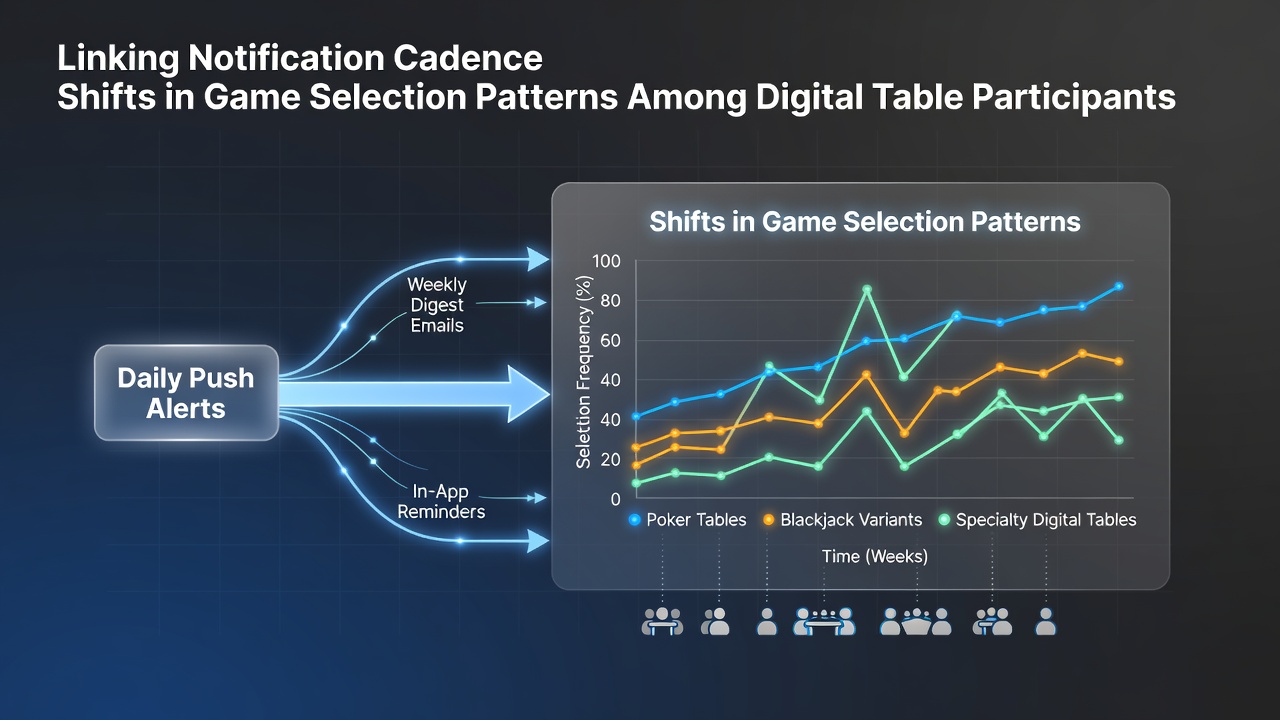
Digital table game platforms have integrated notification systems that deliver updates on promotions, game availability, and player progress, and researchers tracking these systems note connections between alert frequency and the types of games users choose to play. Data collected across multiple operator platforms shows that variations in how often notifications arrive correspond with measurable changes in selection patterns, particularly among participants in blackjack, roulette, and poker variants.
Platform analytics from 2025 indicate that users receiving alerts every two to three days tended to explore a wider range of table games compared with those receiving daily messages, while groups exposed to hourly notifications often returned to previously played titles within shorter time frames. These observations come from aggregated user behavior logs that operators share with industry research groups, allowing analysts to map cadence against selection shifts without relying on individual account details.
Patterns Observed in Notification Timing
Studies compiled by the American Gaming Association reveal that moderate notification intervals align with increased trial of new table variants, whereas high-frequency alerts correlate with repeated selections of familiar options. Participants who received three to four messages per week showed a 14 percent rise in roulette selections during the same period, according to figures released in early 2026, while daily alerts produced no comparable movement toward less familiar games.
Timing within the day also appears in the datasets. Messages sent during evening hours produced different selection responses than morning deliveries, with evening alerts linking to higher volumes of multi-hand blackjack sessions. Operators adjust delivery windows based on these recorded patterns, and the adjustments themselves become part of the cadence that subsequent data captures.
Data Sources and Measurement Methods
European operators contributing to reports from the European Gaming and Betting Association supplied anonymized session data covering more than two million table game interactions between January and May 2026. Analysts cross-referenced notification logs with game start events and found consistent associations between cadence adjustments and changes in game category proportions. The methodology relies on timestamp matching rather than self-reported surveys, which reduces recall bias in the resulting statistics.
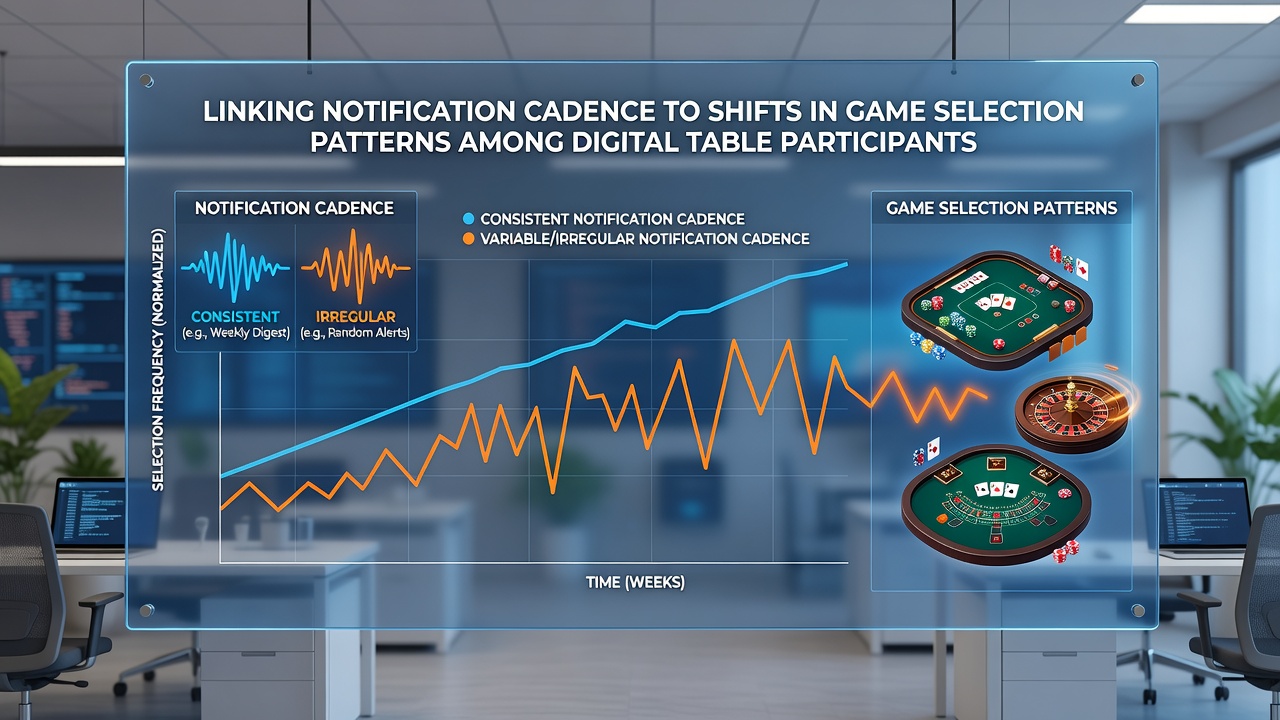
Additional measurements track session length alongside cadence. Platforms that spaced notifications further apart recorded longer average sessions when users moved into new game categories, whereas frequent alerts corresponded with shorter, repeated visits to the same game. These metrics appear in quarterly summaries circulated among platform developers and regulatory compliance teams.
Regional Variations in June 2026
Records from North American and European markets compiled through June 2026 show parallel trends despite differing regulatory environments. In jurisdictions where operators must log promotional communications, the stored cadence data allows direct comparison with selection logs. Australian platforms following similar reporting standards contributed datasets that align with the broader pattern, confirming that notification spacing influences selection diversity across multiple regulatory frameworks.
Operators note that cadence changes introduced in response to these datasets often produce measurable follow-up shifts within two to three weeks. A platform that reduced daily alerts to every third day documented an uptick in poker table entries during that window, consistent with earlier findings from the aggregated industry reports.
Implications for Platform Design
Design teams incorporate cadence controls that let users set preferred frequencies, and usage statistics indicate that participants who customize these settings display selection patterns closer to the moderate-cadence groups in the research data. Platform updates released ahead of June 2026 included refined scheduling options that reflect the observed correlations between spacing and game exploration.
Continued monitoring through the second half of 2026 will supply additional data points on whether sustained cadence adjustments maintain the initial selection shifts or whether patterns stabilize over longer periods. Industry groups continue to compile these figures for distribution to operators seeking evidence-based notification strategies.
Conclusion
Available datasets establish clear associations between notification cadence and the distribution of game selections among digital table participants. Operators and analysts rely on timestamp-linked records to identify these connections, and the resulting patterns inform adjustments implemented across multiple markets. Further releases scheduled for late 2026 will extend the timeline of observations and allow comparison against the trends recorded through June of that year.